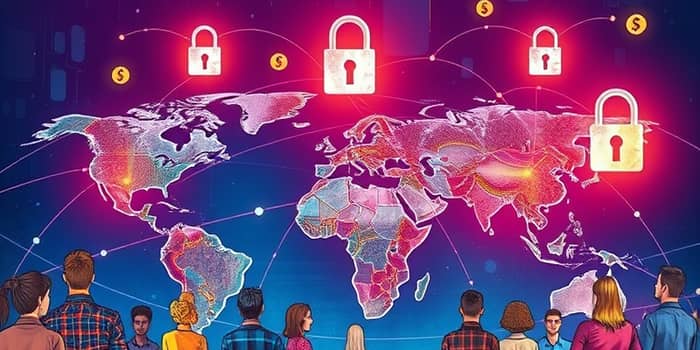
As we look ahead, the way money moves around the world is being reshaped by technology, regulation, and consumer expectations. What once was a slow, fragmented process is fast becoming an instant payment infrastructure that spans borders, integrates digital identities, and leverages artificial intelligence to protect every transaction.
This article explores the innovations, challenges, and opportunities that will define the future of payments, inspiring you to embrace change and adopt strategies that ensure your business or personal finances remain secure, efficient, and inclusive.
For decades, payment systems were globally standardized but siloed at a national level. Today, we’re witnessing a shift toward fragmented regional payment ecosystems designed to boost resilience and sovereignty. Countries in Southeast Asia, Europe, and the Middle East are rolling out domestic real-time rails, while simultaneously forging cross-border linkages to maintain global reach.
Real-time networks like India’s UPI and Brazil’s Pix have become household names, and projects such as PayNow-PromptPay (Singapore–Thailand) and DuitNow-PromptPay (Malaysia–Thailand) demonstrate the power of partnership. These systems not only clear payments in seconds but also embed rich data, reducing errors and enabling smarter financial decisions.
These pillars are converging to create an ecosystem where money moves faster, costs drop, and accessibility soars. Let’s examine each in detail.
Instant payment rails have become an expectation. Businesses no longer tolerate multi-day clears, and consumers demand immediate confirmation. Mastercard’s Transaction Stream exemplifies this trend, offering same-day clearing and settlement to free up working capital.
Globally, more than 70 countries have launched real-time systems, with adoption projected to reach nearly 100 by 2030. This expansion supports a vivid economic tapestry in which SMEs can pay suppliers overseas in seconds and travelers can split bills in local currencies without exorbitant fees.
Secure digital identity wallets are unlocking seamless access to banking, government services, and even cryptocurrency transactions. By replacing cumbersome blockchain addresses with verified aliases for crypto transactions, these wallets curb fraud and simplify onboarding.
In emerging markets, digital ID initiatives can extend financial inclusion to hundreds of millions. Imagine a farmer in rural Africa verifying age, credit history, and land ownership in minutes, then accessing microloans to expand production—all from a smartphone.
Agentic commerce is no longer science fiction. Generative AI agents can autonomously negotiate, purchase, and pay for goods on behalf of users, guided by predefined preferences and budgets. Major players such as Visa, PayPal, and Stripe are developing AI-powered agents managing transactions, complete with fraud detection and regulatory compliance built in.
By analyzing spending patterns in real time and adjusting parameters, these AI systems deliver frictionless experiences while keeping bad actors at bay.
Central bank digital currencies are no longer hypothetical. From China’s digital yuan pilot to the Bahamas’ Sand Dollar, CBDCs promise lower transaction fees and faster settlements. As more nations test multi-CBDC bridges, cross-network interoperability becomes a reality, knitting together regional rails into a cohesive global fabric.
Meanwhile, stablecoins are carving out a niche in e-commerce and remittances. Leading platforms now accept US-denominated stablecoins, offering instant transfers with minimal slippage and transparent fees, further galvanizing the multirail payments revolution.
Today’s consumers demand choice and convenience. From buy now, pay later to biometric wallets, preferences vary by region and demographic. Here’s what’s rising:
Gen Z and Millennials, in particular, champion the circular economy and sustainable payments. Micro-transactions that reward recycling, resale, or reuse are emerging, enabled by circular economy model embracing reuse loops integrated into loyalty programs.
As payment rails become more sophisticated, consumers will gain unprecedented control. Imagine setting your card to automatically convert to a stablecoin for cross-border purchases, or routing everyday expenses to debit while reserving credit for major investments.
Regulation and standardization efforts like ISO 20022 will harmonize data formats, empowering richer analytics and smarter financial planning. Super-apps will leverage these insights to offer dynamic offers, customized fees, and predictive budgeting tools.
The future of payments is instant, secure, and global. It’s a world where funds clear in seconds, digital identities unlock new opportunities, AI empowers autonomy, and sustainable practices drive consumer loyalty.
Whether you’re a business leader, fintech innovator, or everyday consumer, now is the time to prepare. Engage with real-time rails, explore digital ID solutions, adopt AI-driven fraud defenses, and participate in CBDC pilots. By doing so, you’ll not only keep pace with change—you’ll shape the very future of money itself.
References