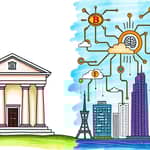
In a world defined by rapid change and unforeseen disruptions, traditional forecasting falls short. Leaders today need a powerful tool to navigate uncertainty, anticipate risks, and seize opportunities. Scenario planning offers more than a mere prediction—it’s a method to craft flexible long-term plans that stand resilient against unexpected twists.
By exploring multiple plausible futures, organizations cultivate robust strategic responses rather than relying on a single forecast. In this article, we delve into the origins, methodologies, phases, and practical applications of scenario planning, equipping you with the knowledge to prepare for whatever lies ahead.
The seeds of scenario planning were sown in the 1970s at the Rand Corporation, where analysts sought methods to anticipate geopolitical shifts. Over time, leading think tanks and corporations refined the practice:
Energy companies were among the first to adopt scenario planning, accurately forecasting oil crises and gaining a competitive edge. Later, the U.S. military and NASA integrated these techniques into defense and exploration strategies. Today, scenario planning spans industries from finance to retail, underscoring its universal value.
At its essence, scenario planning involves constructing internally consistent sets of assumptions to imagine how driving forces might interact over time. Unlike predictive forecasting, which extrapolates past trends, scenarios explore divergent pathways shaped by uncertainty.
There are three primary classes:
By considering all three, organizations avoid blind spots and prepare for a spectrum of outcomes.
Scenario planning encompasses several formal approaches:
Additional techniques—morphological analysis, trend-impact analysis, and the Delphi method—further enrich the process, ensuring scenarios are grounded in rigorous data and diverse perspectives.
A typical process unfolds in three overarching phases:
Phase 1: Identification and Analysis
Define the focal question, scope, and key drivers of change. Gather data on economic, technological, political, and social trends, establishing the foundation for scenario development.
Phase 2: Scenario Development
Select critical uncertainties—often via a two-by-two matrix—to generate 4–9 initial scenarios. Refine and distill these into two or three coherent narratives that capture the most divergent possibilities.
Phase 3: Strategic Response and Action Planning
Translate implications into actionable strategies. For each scenario, identify opportunities, threats, and decision triggers. Develop contingency plans, resource allocations, and communication protocols to ensure swift adaptation.
Scenario planning success hinges on comprehensive driver assessment. Essential categories include:
Mapping interdependencies among these drivers reveals tipping points and growth opportunities, ensuring scenarios capture the full complexity of the environment.
Embracing scenario planning delivers profound advantages:
Moreover, organizations develop adaptive and resilient decision-making habits, cultivating a culture that anticipates change rather than merely reacts to it.
Scenario planning shines in diverse contexts:
High-Stakes Decisions
When evaluating market expansions or mergers, leadership teams simulate outcomes under best-case and worst-case scenarios, balancing risk and reward with greater confidence.
Research and Development
By projecting technology trajectories and regulatory landscapes, R&D managers allocate resources to innovations most likely to thrive across varied futures.
Supply Chain Resilience
Manufacturers model disruptions—logistical jams, labor strikes, raw material shortages—and develop contingency plans like supplier diversification and dynamic inventory policies.
Across sectors, scenario planning has driven outsize impact:
Energy
Oil companies used scenario analysis in the 1970s to anticipate supply shocks, securing strategic stockpiles and investment shifts that weathered the crisis.
Automotive
Leading carmakers forecast the rise of electric vehicles and autonomous driving, realigning R&D budgets and forging partnerships with tech startups.
Financial Services
Banks conduct stress testing—a form of scenario planning—to ensure capital adequacy under extreme economic downturns and emerging cyberthreats.
In an unpredictable landscape, scenario planning is not a luxury but a necessity. By weaving foresight into strategic routines, organizations cultivate multiple possible futures as a source of innovation rather than fear.
Start today: assemble a cross-functional team, define your focal question, and dive into driver analysis. Through disciplined process and creative imagination, you can transform uncertainty into clarity and change into opportunity. Embrace scenario planning to turn the unpredictable future into a canvas of strategic possibility.
References