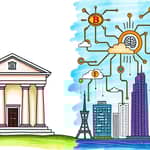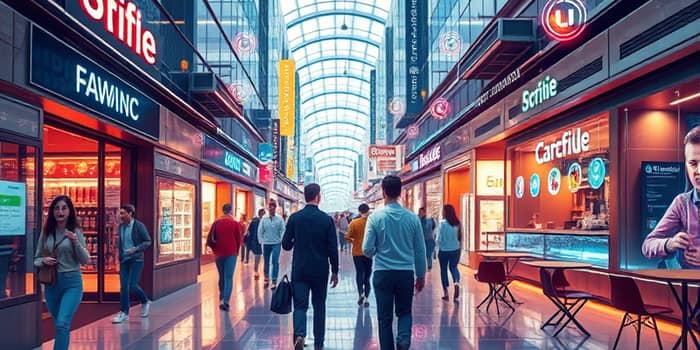
Imagine stepping into a café, ordering your favorite drink, and simply walking out—no cash exchanged, no card swiped, and no app prompts interrupting your day. This is the promise of invisible payments: a world where commerce is woven into the fabric of our daily lives, freeing us from friction and enabling effortless experiences.
Over the last two decades, payment methods have evolved at a breakneck pace. We moved from cash to cards, from cards to contactless taps, and from taps to mobile wallets. Each innovation sought to streamline the checkout journey and eliminating traditional payment friction points. Now, invisible payments take the next bold leap, making manual authorization steps virtually obsolete.
Rather than presenting a credit card or opening a payment app, customers simply engage with a service—hail a ride, grab groceries, or stream their favorite show—and the system handles the rest, delivering a truly frictionless customer journey that feels as natural as breathing.
At the heart of invisible payments lies a multi-step process that remains unseen by users. First, during setup, customers link their payment credentials to a service, often within an app or platform. This establishes the foundation for automatic charges without any manual input.
Next, a transaction trigger activates the payment flow. Triggers can range from biometric identification at a cashierless store to simply walking out of a venue or reaching the end of a ride-hailing trip. Once triggered, the background processing engine encrypts and tokenizes the payment data, sending it securely to a processor.
Finally, after validation and deduction, customers receive a subtle notification confirming that the transaction is complete. The entire experience feels like magic: seamless, secure, and near-instantaneous.
Several cutting-edge technologies converge to make invisible payments possible:
By harnessing these innovations, businesses can offer rapid, invisible transactions everywhere—from retail floors to streaming platforms, and even within connected home appliances.
Invisible payments have already taken root in several industries, transforming user expectations and operational efficiency:
These examples illustrate how invisible payments are already transforming the landscape of transactions and setting new standards for convenience.
The rapid adoption of contactless methods has paved the way for invisible payments to flourish. By 2025, mobile wallet users globally are expected to reach 5.6 billion, marking a 7% increase year-over-year. Consumers in the Asia-Pacific region lead the charge, accounting for 56% of all contactless transactions.
Looking ahead, the total value of contactless and invisible payments is projected to exceed $10 trillion by 2027. Industries from healthcare to public transportation are integrating these solutions, forecasting a 221% surge in adoption between 2022 and 2026.
By 2032, the global contactless payment market could reach $90.6 billion, driven by continuous innovation and growing consumer demand for speed and convenience.
Security remains paramount. Modern invisible payment systems rely on multi-layered defenses, including tokenization, encryption, and continuous authentication. These measures have contributed to a 34% reduction in fraud rates for NFC transactions in 2025.
Emerging blockchain-based solutions promise zero chargeback risk for merchants, while pre-authenticated credentials ensure that only authorized users can trigger payments. Through such measures, invisible payments inspire trust and uphold robust protections.
Several dynamics propel the shift toward invisible payments:
Businesses embracing invisible payments report measurable benefits: reduced queue times, higher transaction volumes, and improved customer satisfaction. In pilot programs, AI-powered point-of-sale systems increased sales by up to 20%, demonstrating the powerful synergy between automation and user experience.
Invisible payments represent more than a technological trend—they signal a fundamental shift in how we perceive commerce. By dissolving barriers at the point of sale, they empower individuals to focus on what truly matters: enjoying products and services without interruption.
Whether you’re a consumer craving effortless experiences or a business seeking a competitive edge, the time to explore invisible payments is now. Step into a future where transactions fade into the background, letting life’s moments take center stage in a world without checkout lines.
References