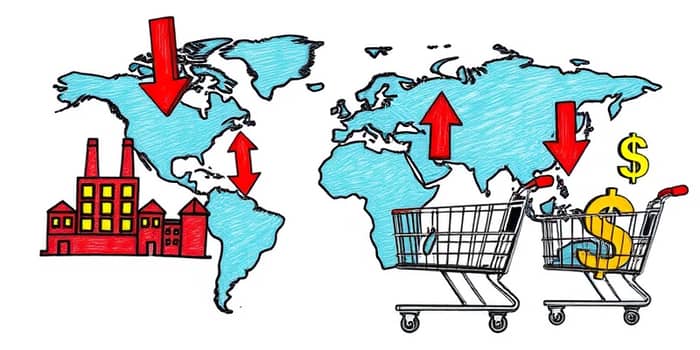
In 2025, economies around the world confront an unexpected and often underappreciated risk: deflationary pressures. While headlines remain fixated on high inflation, a subtler decline in prices is taking hold in major markets, threatening to erode growth, sap confidence, and amplify debts. Ignoring deflation now could mean longer stagnation and deeper economic wounds in the years ahead.
This article explores the roots of deflation, its global reach—especially in China—its mechanisms, and the policy dilemmas it poses. We close with practical strategies to mitigate its worst effects and restore momentum.
Deflation—the sustained decline in the general price level—occurs when supply outpaces demand persistently. In 2025, a combination of structural overcapacity, subdued consumer sentiment, and lingering trade tensions is creating downward price pressures. The industrial sector in many advanced and emerging economies is churning out goods faster than markets can absorb them, while households and businesses hesitate to spend.
Monetary policy, stretched thin by past crises, now struggles to keep pace. Central banks that once aggressively cut rates to fight recessions find themselves unable to push inflation above target. As a result, markets risk slipping into a cycle where falling prices breed fear, and fear further suppresses spending.
China, long the engine of global expansion, now exemplifies this phenomenon. A mismatch between capacity and domestic demand has given rise to structural overcapacity in China's manufacturing sector. Factories operate below full utilization, pushing companies to cut prices to clear inventories.
The property sector compounds the strain. Sales of new homes are projected to drop by 12% in 2025, as consumer confidence in real estate remains weak. Property prices continue to fall in many cities, deepening concerns about defaults among highly leveraged developers and amplifying risk in the banking system.
As a result, China’s economic growth is forecast to slow to 4.6% in 2025. This deceleration not only dampens domestic activity but also ripples outward, weakening global demand for raw materials and manufactured exports.
While deflation looms in pockets of the world, inflation remains elevated elsewhere. Global headline inflation eased from 5.7% in 2023 to 4.0% in 2024, yet two-thirds of countries still exceed pre-pandemic averages. Over 20 developing economies grapple with double-digit inflation rates.
Tariffs add an inflationary overlay by raising import costs, while simultaneously choking demand for exports. For China, this paradox intensifies deflation at home even as it spreads inflation abroad, creating a complex global patchwork of price dynamics.
Deflation impacts both debt dynamics and spending behavior. As prices fall, the real value of debt increases substantially, making it harder for borrowers to service loans. With global public and private debt above 256% of GDP, even a modest drop in the price level can trigger widespread distress.
Consumer and business reactions further entrench the downturn. Expectations of lower future prices lead households to delay purchases and firms to postpone investment, fueling a self-reinforcing cycle of economic stagnation. Employment growth falters, and fiscal revenues shrink, limiting governments’ ability to respond.
In Southeast Asia and parts of Africa, export revenues decline as global demand softens. Without robust fiscal buffers, these countries risk falling into debt distress. Meanwhile, essential food prices remain high due to supply disruptions, creating a stark divide between deflation in manufactured goods and inflation in basic necessities.
Central banks face a dilemma: cutting rates to stimulate growth may undermine credibility in fighting inflation, while maintaining tight policy risks deepening deflation. In 2025, the G7 has begun modest rate reductions, yet the U.S. Federal Reserve holds steady, wary of resurgent inflation from tariffs.
At the same time, governments have limited fiscal room. Many developing economies lack the capacity for large stimulus packages, and rising public debts constrain further borrowing. The consumer confidence and business investment suffer as political pressures mount on policymakers to choose between growth and stability.
The following table highlights key metrics that define the current economic landscape:
While deflation represents a formidable challenge, coordinated policy action can limit its damage and steer economies back toward healthy growth. Key strategies include:
By strengthening social safety nets, governments can support demand even as they address overcapacity. Central banks may explore unconventional tools—such as forward guidance and asset purchases—while maintaining clear inflation targets to protect long-term credibility.
Ultimately, overcoming deflation requires a delicate balance of stimulus, reform, and credible policy frameworks. With proactive steps, economies can break free from the cycle of falling prices and restore momentum, ensuring a more resilient and inclusive global recovery.
References